Project Overview

Scaling UX Research with Tools & Ops: Dovetail Rollout

This research ops initiative focused on making evidence easier to find, reuse, and apply across product work. After reviewing how the team was currently conducting research, organizing data, and sharing findings, I designed a Dovetail rollout centered on taxonomy, shared synthesis workflows, and team enablement so research could scale without losing rigor.

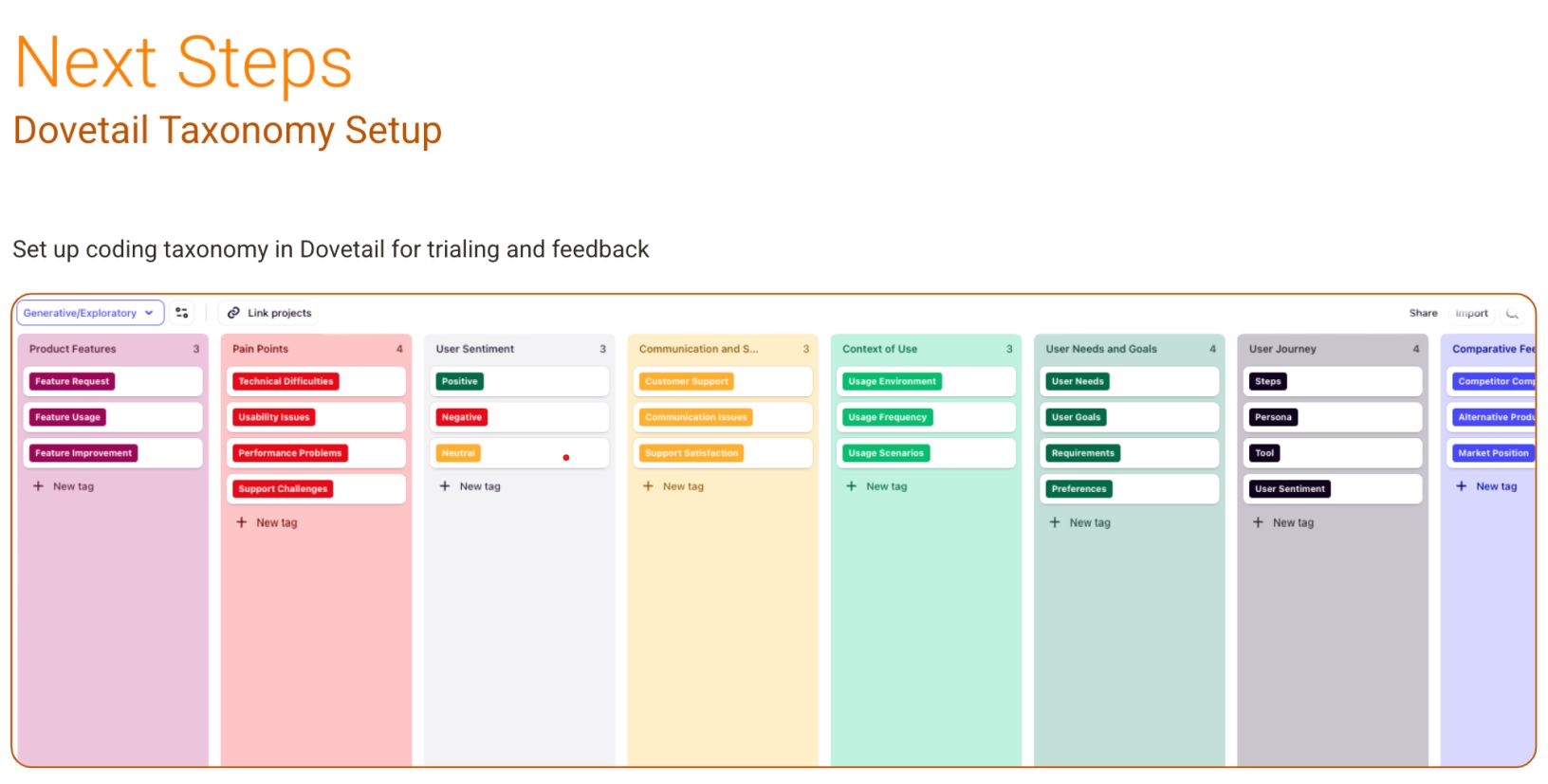
Dovetail taxonomy setup showing categories for product features, pain points, sentiment, support, context of use, goals, journey, and comparative findings
Role
Research Ops Lead
Platform
Dovetail
Focus
Taxonomy, synthesis, and team enablement
Users
UX researchers and cross-functional product partners
Outcome
Shared workflows and a more reusable evidence system
57%

Of the team’s work was qualitative, which made consistent synthesis and coding workflows especially important.

25%

Of researchers reported not using any coding system to organize and analyze qualitative data.

8 pillars

Built into the Dovetail taxonomy so findings could be organized in a way the team could actually reuse.

The challenge

What was happening

Research was already happening across the organization, but the practice was fragmented. Teams were relying on a mix of Google Meet, Sheets, Slides, and FigJam, and coding practices varied widely from person to person. That made synthesis harder to scale, past work harder to discover, and evidence harder to carry forward into product decisions.

What this work needed to solve

  • Create a more consistent way to organize qualitative evidence.
  • Design a taxonomy that matched how the team actually researched products and users.
  • Make insight sharing easier across researchers and stakeholders.
  • Support adoption through enablement, not just tool configuration.
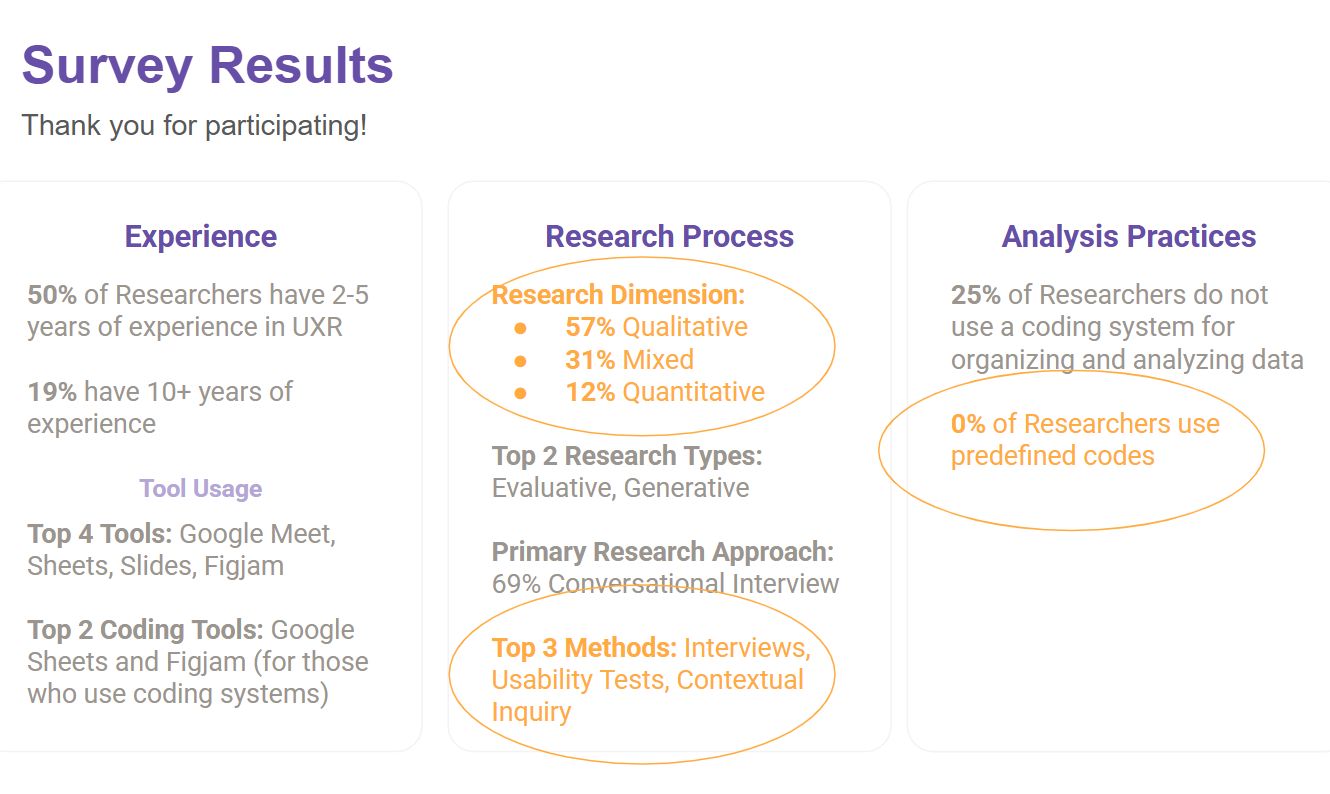
Survey results slide summarizing researcher experience levels, research process patterns, top methods, and analysis practices
A current-state survey established the baseline. It showed a team with strong qualitative practice, heavy reliance on interviews and evaluative work, and inconsistent use of structured coding systems.

Research Methods

I approached the rollout like a service and systems problem. Before setting up the tool, I needed to understand how the team currently worked, where analysis friction was showing up, and what would make a shared repository genuinely useful.

Practice audit

  • Survey review: Assessed researcher experience levels, common methods, tool usage, and current analysis habits.
  • Workflow baseline: Looked at how insights were currently being captured, coded, and shared across studies.

Collaborative workshops

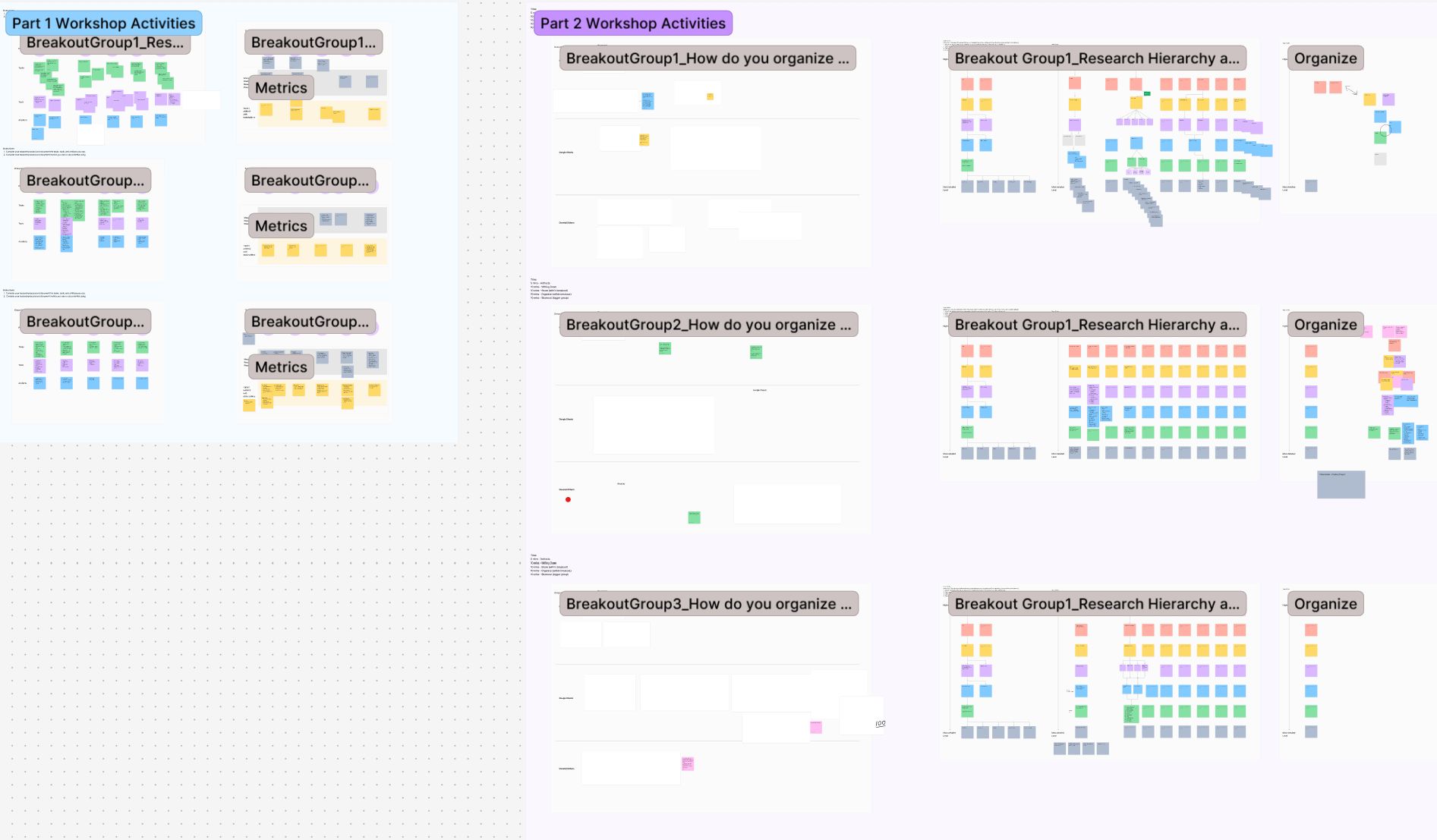
  • Breakout sessions: Facilitated workshops to understand how researchers organized work, discussed metrics, and structured evidence.
  • Co-design: Used workshop outputs to shape hierarchy, naming, and governance instead of imposing a taxonomy top-down.

Repository design

  • Taxonomy setup: Built a coding structure in Dovetail across product features, pain points, sentiment, communication, goals, and journey stages.
  • Enablement planning: Paired the setup with guidance on how the team should use it consistently over time.

The Process

Turning a tool rollout into a repeatable research practice.

The work moved from understanding the current state, to aligning on structure, to building the workflows that would make Dovetail valuable beyond a one-time setup.

01

Audit the current state

  • Reviewed team tool usage, experience levels, and common research methods.
  • Identified where synthesis quality and retrieval were breaking down.
02

Run working sessions

  • Facilitated breakout workshops around metrics, research hierarchy, and organization patterns.
  • Used the sessions to surface language, categories, and edge cases the team cared about most.
03

Design the taxonomy

  • Created a Dovetail coding structure for trials and feedback.
  • Built categories for product features, pain points, sentiment, support, context of use, goals, and user journey.
04

Pilot and refine

  • Tested the structure against real research data to make sure it held up in practice.
  • Adjusted naming, hierarchy, and tag coverage where the workflow still felt too brittle.
05

Enable adoption

  • Positioned the rollout as a team practice, not just a repository migration.
  • Connected the setup to collaboration, quality, analysis speed, and better insight reuse across product work.

Workshop Snapshot

The taxonomy was informed by collaborative workshop activities rather than assumptions. These sessions helped translate individual habits into a structure the broader team could align around.

What the work uncovered

The biggest finding was that the problem was not a lack of research. It was a lack of shared structure. The rollout needed to support how evidence moved through the team, not just where it was stored.

Research practice was strong, but fragmented

The team was already doing thoughtful work, especially qualitative and evaluative research, but artifacts lived across too many tools and too many personal systems.

Inconsistent coding made synthesis harder to scale

With no shared taxonomy or predefined codes, each project risked becoming a fresh synthesis exercise rather than building on prior learning.

The repository needed to reflect real product questions

Categories like user goals, pain points, feature requests, support experiences, and journey stages made the repository useful because they matched how teams asked for evidence.

Adoption depended on enablement

A clean tool setup was not enough. The rollout needed workshops, shared expectations, and guidance for how to keep quality high while expanding access.

Configured Dovetail taxonomy with multiple structured tag categories
The taxonomy translated abstract research ops goals into a practical system researchers could use during coding, synthesis, and retrieval.

Business Impact

What this rollout was designed to unlock

Because this was a tools and operations initiative, the value was operational as much as methodological. The rollout created a foundation for faster synthesis, stronger collaboration, and more reusable research knowledge across the organization.

Faster

Analysis and process time through more structured coding and less reinvention from project to project.

Shared

Insight access through a repository teams could search, learn from, and bring into decision-making earlier.

Broader

Research advocacy through workshops, clearer best practices, and stronger visibility into how the team worked.

Deeper

Foundational and evaluative research quality because the team had better structure for organizing and comparing evidence.

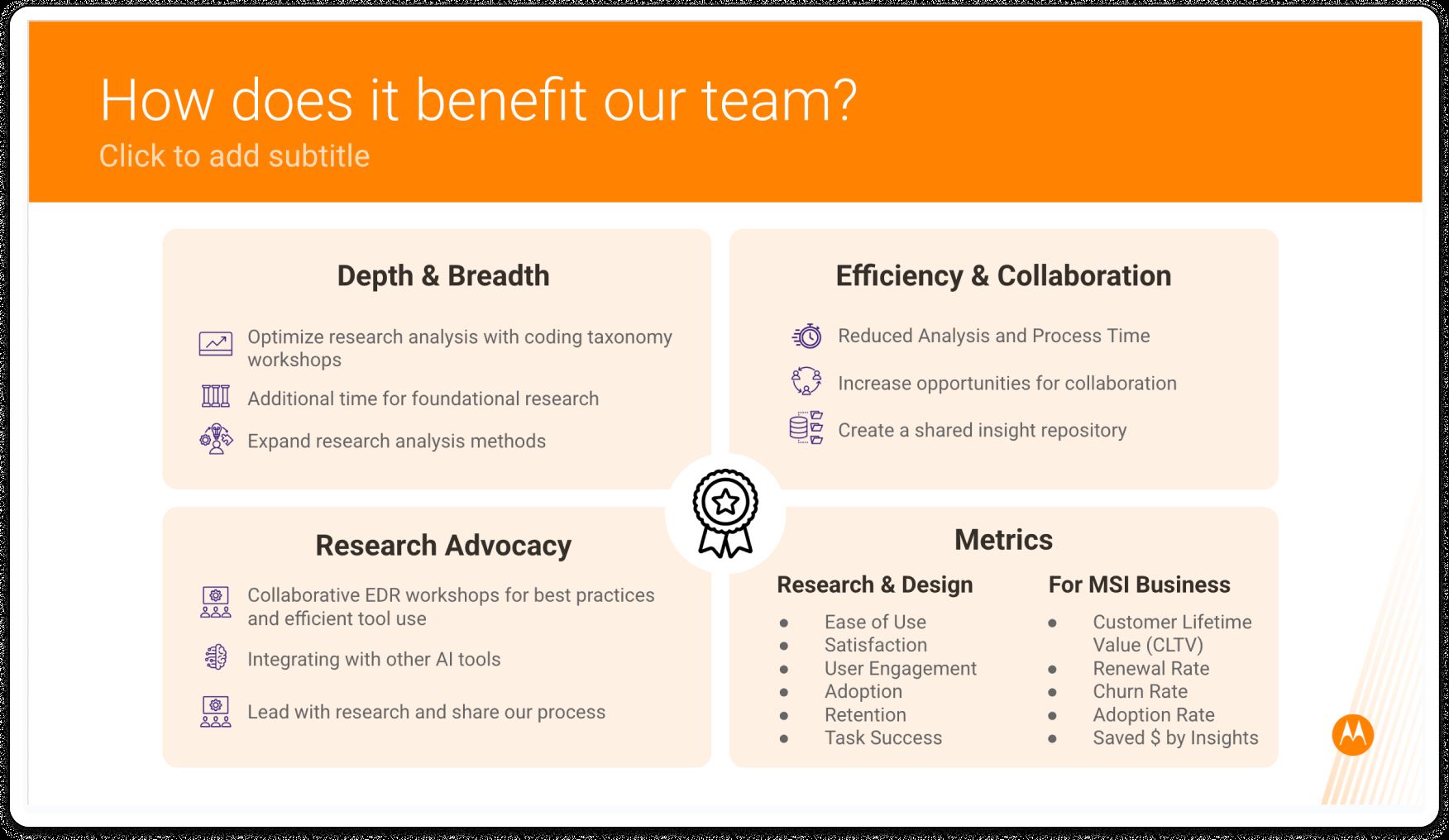
Slide outlining benefits of the Dovetail rollout across depth and breadth, efficiency and collaboration, research advocacy, and metrics
The final framing connected the Dovetail rollout to team-level outcomes: stronger analysis depth, reduced process time, better collaboration, and a more visible, measurable research practice.

Learning & Reflection

This work reinforced that research ops is not really about tools. It is about making insight travel. The hardest part was not configuring Dovetail. It was designing a structure that respected how researchers already worked while still nudging the practice toward more consistency.

It also reminded me that adoption lives or dies on enablement. A repository becomes valuable when people understand how to use it, when categories feel intuitive, and when the system makes their day-to-day work easier instead of more rigid.

If I were extending this case study further, I would add a stronger longitudinal view of adoption over time, especially around what the team continued using, what needed reinforcement, and where repository governance should evolve next.